
Balancing Emotional and Mental Labor: A Guide for Healthy Partnerships

Marriage is often described as a partnership—two people working together toward shared dreams, commitments, and responsibilities. But for many couples, the reality looks a little different. Instead of evenly splitting the responsibilities, one spouse often ends up carrying what’s known as the mental load.
Every relationship comes with responsibilities, but not all responsibilities are visible. The mental load in marriage—also called cognitive labor or invisible labor—is the ongoing process of planning, organizing, anticipating, and remembering everything that keeps life running.
It goes beyond chores like folding laundry or taking out the trash. The mental load is about who:
Notices when the laundry detergent is running low
Remembers to schedule the next dentist appointment
Anticipates that a child will need a new backpack before school starts
Keeps track of birthdays, school events, and family obligations
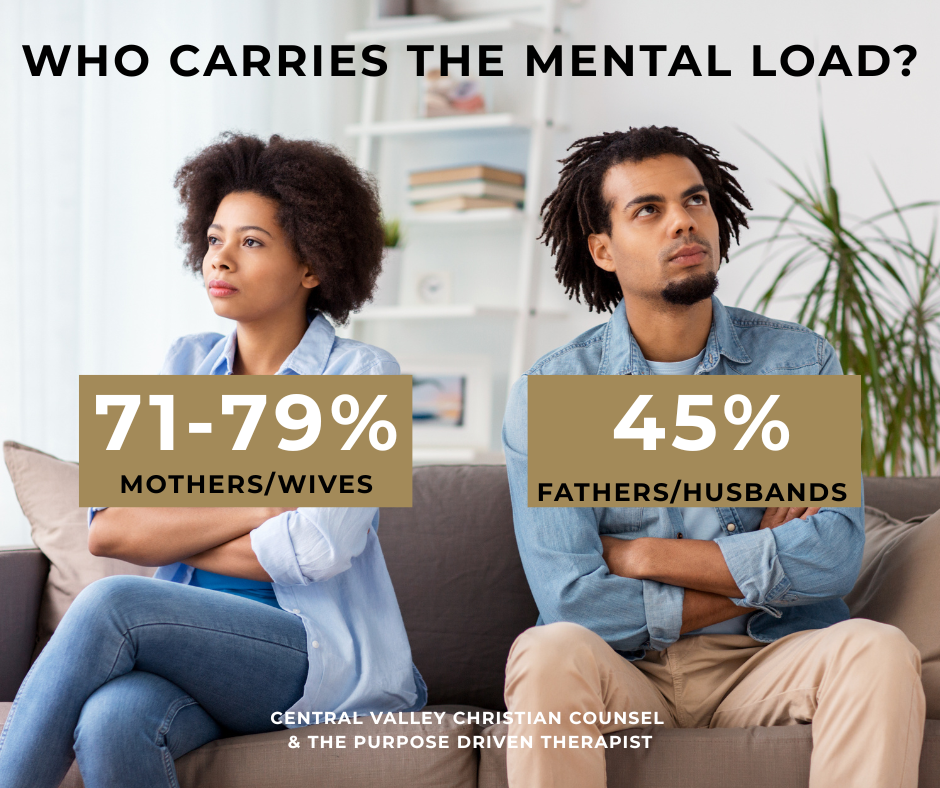
Research consistently shows that women—especially wives and mothers—shoulder the majority of this invisible work. One study found that mothers manage around 71–79% of mental load tasks, while fathers report closer to 45%. That gap isn’t just about chores—it’s about who carries the constant mental weight of family life.
Therapist Insight: “Mental load isn’t just about what gets done—it’s about who carries the responsibility of thinking about it all the time. That ongoing mental pressure takes a toll on energy, mood, and relationships.”
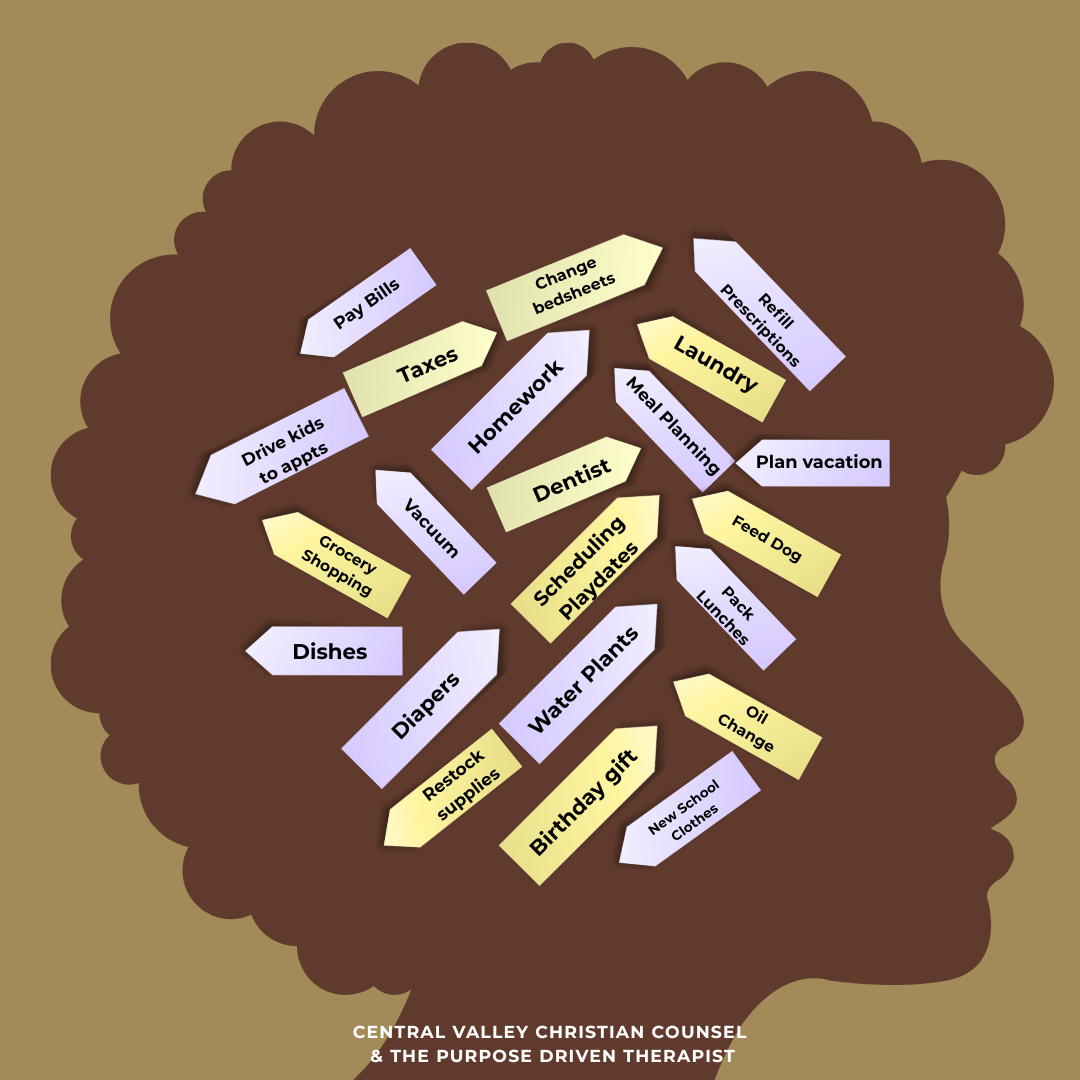
Examples of Mental Load Wives Often Carry
If you’ve ever thought, “Why am I the only one who thinks about these things?”, you’ve probably experienced the mental load firsthand. Examples include:
Coordinating school drop-offs, pickups, and activities
Making grocery lists and planning meals for the week
Remembering birthdays, holidays, and extended family events
Keeping track of medical check-ups, bills, and deadlines
Anticipating household needs before they become urgent
These are rarely one-time tasks. They live in the background of daily life, creating a never-ending mental checklist. For many wives, even when they aren’t actively doing chores, they’re still mentally managing them.

How Mental Load Affects Marriages
While it might seem “just part of life,” the imbalance of mental load can deeply affect both partners and their marriage.
Stress and Burnout: Carrying the mental load alone creates fatigue that mimics symptoms of anxiety or depression. The brain doesn’t get to rest.
Resentment: When one partner feels like the default planner, silent frustration builds: “Why do I have to remember everything?”
Emotional Disconnection: The partner carrying the load often feels unseen, unsupported, or undervalued, which erodes intimacy over time.
Conflict Cycles: Fights that seem to be about chores (“Why didn’t you take out the trash?”) are often really about the invisible imbalance: “Why am I the only one who notices what needs to be done?”
Research Spotlight: A University of Bath study (2024) found that mothers manage 7 in 10 household tasks requiring mental labor, and this uneven distribution is strongly linked to relationship dissatisfaction.
Why It’s Hard for Couples to Talk About Mental Load
One of the biggest challenges is that the mental load is invisible. If one partner doesn’t notice that birthday party RSVPs have been handled, or that the pantry was stocked before anyone asked, they may assume those things just “happen.”
This invisibility makes it harder for couples to talk about. The partner carrying the load may feel like nagging is the only way to get help. Meanwhile, the other partner may feel attacked: “I do help! Why isn’t it enough?”
In therapy, we often uncover that couples aren’t just arguing about dishes or laundry—they’re arguing about ownership, appreciation, and recognition. Naming the mental load is often the first step toward healing.

How Couples Can Start the Conversation
If you feel like you’re carrying the mental load in your marriage, it doesn’t have to stay that way. Start by making the invisible visible. Here are some therapy-tested conversation starters:
“I’d like us to talk about not just chores, but the thinking behind them.”
“I don’t want to just delegate—I want us to share ownership.”
“What’s one invisible responsibility you’d be willing to take full ownership of this week?”
These conversations work best when framed as an invitation, not an accusation. Use “I” statements, and focus on creating a shared vision rather than keeping score.
What Equal Partnership Looks Like in a Healthy Marriage
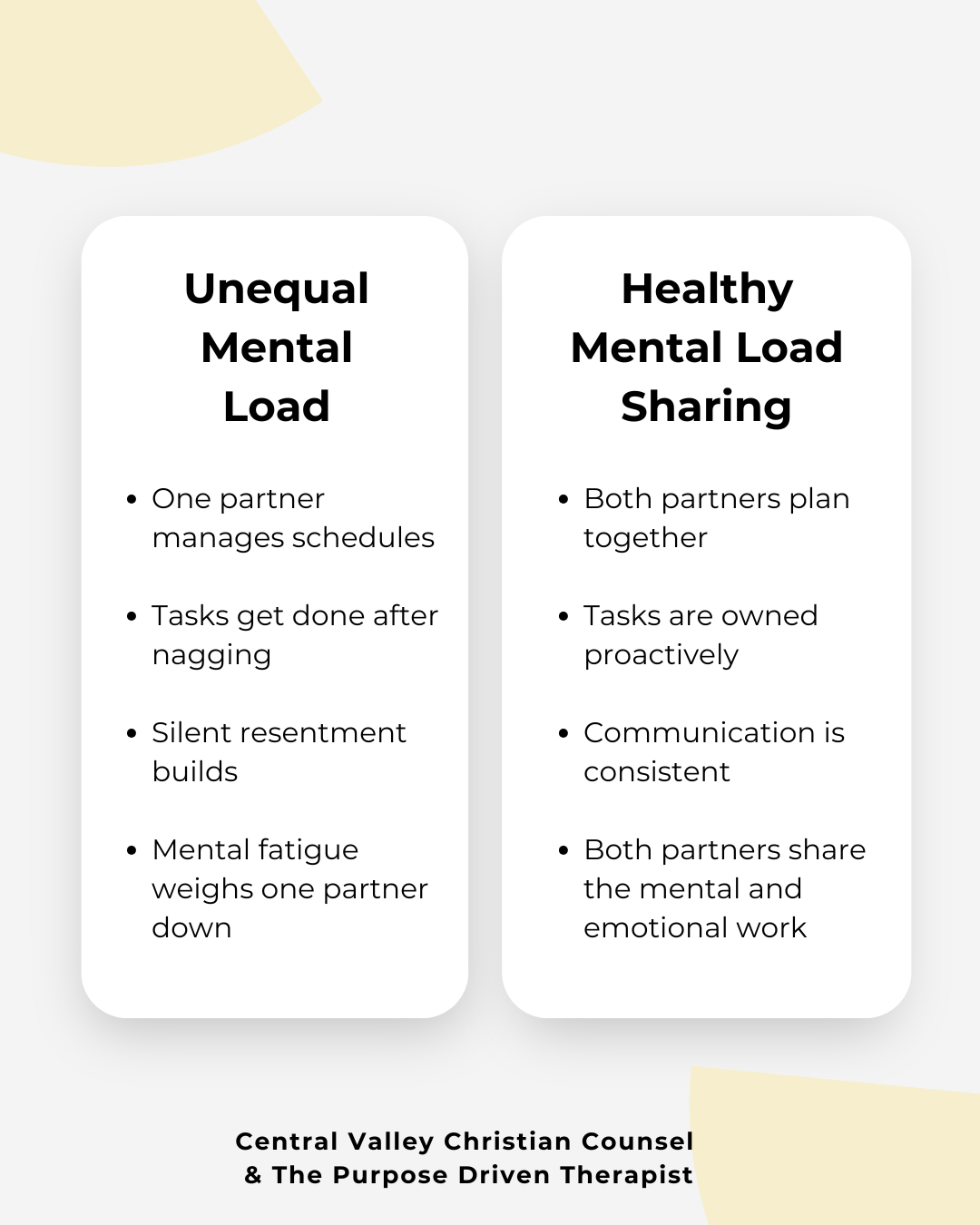
True equality in marriage isn’t about splitting every task down the middle. It’s about shared responsibility for both planning and execution. That means both partners:
Share the cognitive labor of anticipating needs
Take initiative without being reminded
Respect each other’s capacity and need for rest
Here’s the difference:
Therapist Tip: In therapy, couples can be encouraged to experiment with a “task swap.” For one week, trade invisible responsibilities. The experience builds empathy and reveals just how much thought goes into those tasks.
Therapy Tools to Lighten the Mental Load
Couples therapy can provide practical tools and accountability to make the mental load visible and shared. Here are a few strategies that work:
Weekly “State of the Union” check-ins – set aside 15 minutes to review schedules and responsibilities together.
Shared digital tools – apps like Google Calendar, Cozi, or Trello reduce the need for reminders.
Eve Rodsky’s Fair Play system – a card deck that helps couples fairly divide invisible labor.
Protected downtime – ensure both partners get regular space for rest, creativity, and self-care. See Eve Rodsky’s Find Your Unicorn Space.
Couples therapy sessions – a neutral space to identify imbalances, build empathy, and reset habits. Email us for more information.

Ready to Rebalance Your Marriage?
If you recognize yourself in this blog topic—constantly planning, organizing, and anticipating—you’re not alone. The mental load is one of the most common challenges couples face, but it doesn’t have to define your marriage.
Our Marriage Covenant Mastermind™ is a 10-week, faith-based group coaching experience designed for high-achieving couples who are ready to reconnect emotionally, spiritually, and strategically. Together, you’ll learn how to lighten the load and build a healthier partnership. A new group will be forming soon! Don’t miss out on this unique opportunity to strengthen your marriage with a small group of other power couples.
This season, we’re also offering Back-to-School discounted therapy sessions with more payment options —because the best investment you can make for your marriage is learning to share the weight, both physically and emotionally. Email info@centralvalleychristiancounsel.com for more information.
From Burden to Balance
Marriage was never meant to be carried by one person alone. By learning to share both the visible and invisible work of family life, couples not only lighten the load but strengthen the covenant they’ve committed to. True partnership honors both people and creates space for love to thrive.
