
Back to the Present: Grounding Tools for a Calm Mind
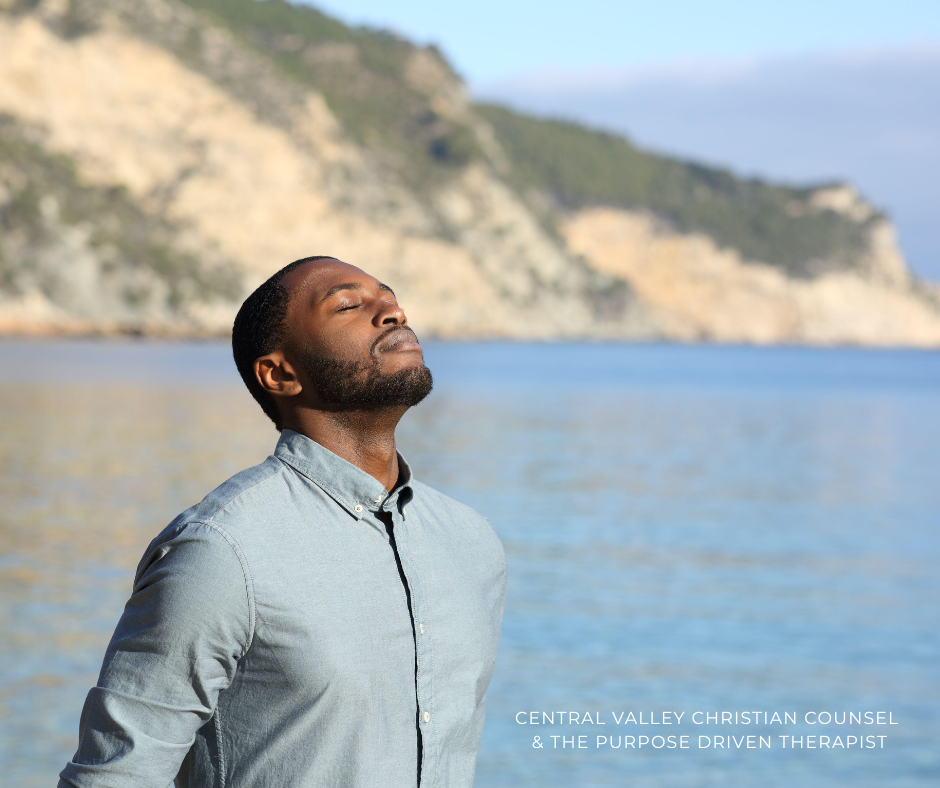
Andre stood at the edge of the water, eyes closed, taking in the slow rhythm of his breath and the warmth of the sun on his skin. For years, he had battled with the silent grip of PTSD—a weight he carried from childhood trauma that often pulled him into panic, restlessness, or emotional shutdown.
But today was different. During a recent therapy session, Andre learned about grounding—simple practices that help bring the mind back to the body and the body back to the present. In this moment, feeling the sand beneath his feet and the breeze on his face, Andre reminded himself: I am safe. I am here. I am now.
Grounding is a therapeutic practice that helps us reconnect to the present moment—through our bodies, breath, senses, and surroundings. It can calm the nervous system, interrupt spirals of anxiety, and bring us back into ourselves. In this blog, we’ll explore what grounding is, why it works, how to practice it, and how it can support your mental health journey.
What Are Grounding Techniques?

Grounding techniques are simple mental, physical, and sensory exercises that help pull you out of distressing thoughts, overwhelming emotions, or dissociative states by bringing your attention back to the here and now.
These techniques help "anchor" you, especially when you're feeling anxious, panicked, triggered, or emotionally dysregulated. They can be used in therapy, at work, in public, or at home.
Think of them as life rafts for your nervous system.
Examples of Grounding Techniques

There are many ways to ground yourself. Here are a few categories and examples:
Sensory grounding – Use your five senses to reconnect to your environment
Touch a textured object
Smell essential oils or citrus
Name five things you see
Cognitive grounding – Use your brain to interrupt racing thoughts
Count backward from 100
Recite a favorite quote or prayer
List categories (e.g., types of animals or songs you love)
Physical grounding – Use movement and body awareness
Feel your feet flat on the floor
Stretch or do gentle yoga
Place a cold object in your hand
Why Grounding Works: Benefits
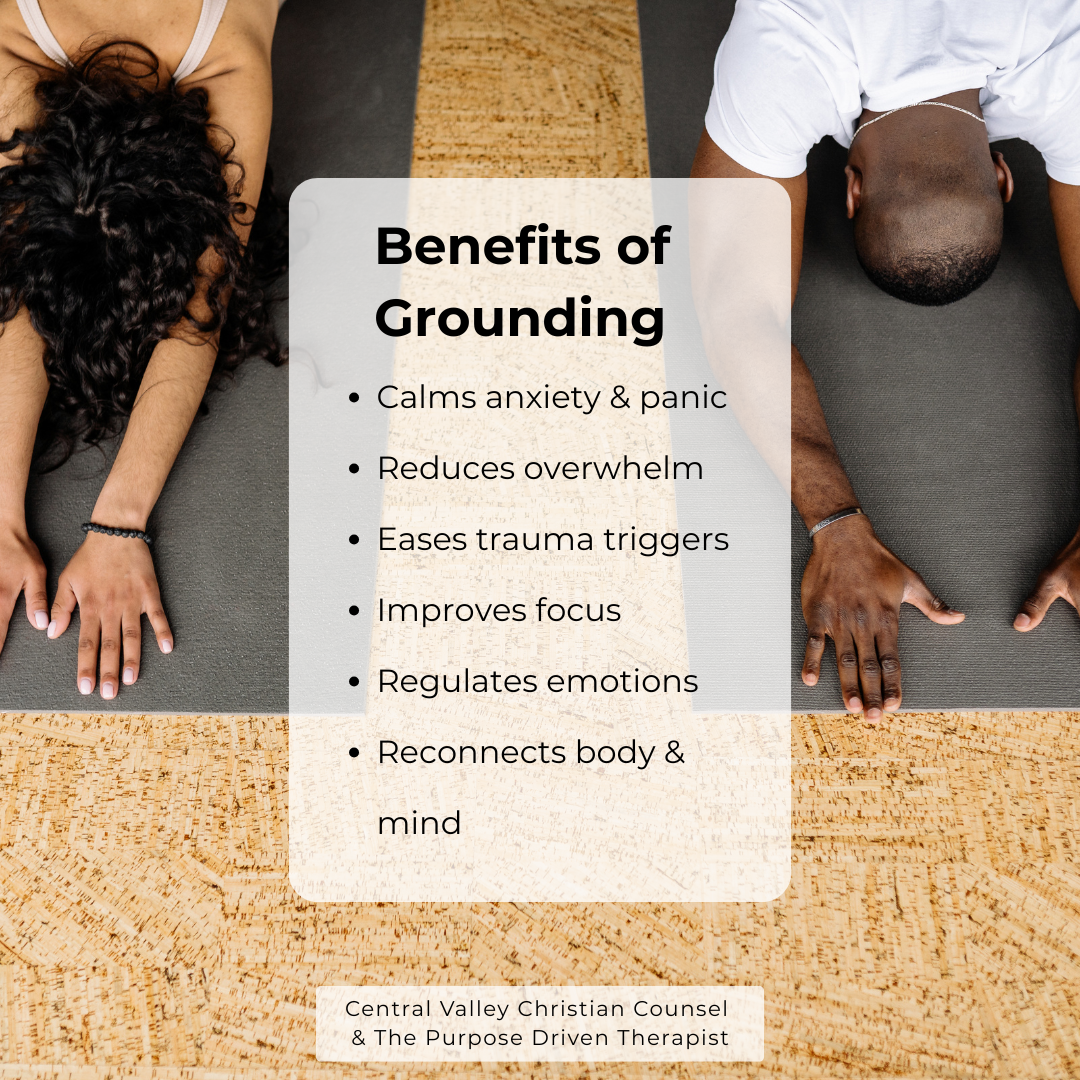
Reduces anxiety and panic symptoms
Helps manage trauma triggers and flashbacks
Interrupts spirals of overthinking or dissociation
Improves emotional regulation and focus
Promotes body-mind awareness and self-soothing
Grounding doesn’t fix everything—but it gives you a moment to breathe, choose, and feel safer in your body again.
Who Can Benefit from Grounding Techniques?

Individuals with trauma, PTSD, or anxiety
Professionals experiencing burnout or high stress
Teens and children struggling with emotional regulation
Those managing depression, dissociation, or overwhelm
Anyone seeking a deeper connection to the present
Grounding is for everyone, and it can be especially transformative for BIPOC and marginalized communities navigating systemic stressors.
Grounding Works: Quick Stats
Mindfulness-based techniques like grounding have been shown to reduce anxiety by up to 58% (JAMA Internal Medicine, 2014).
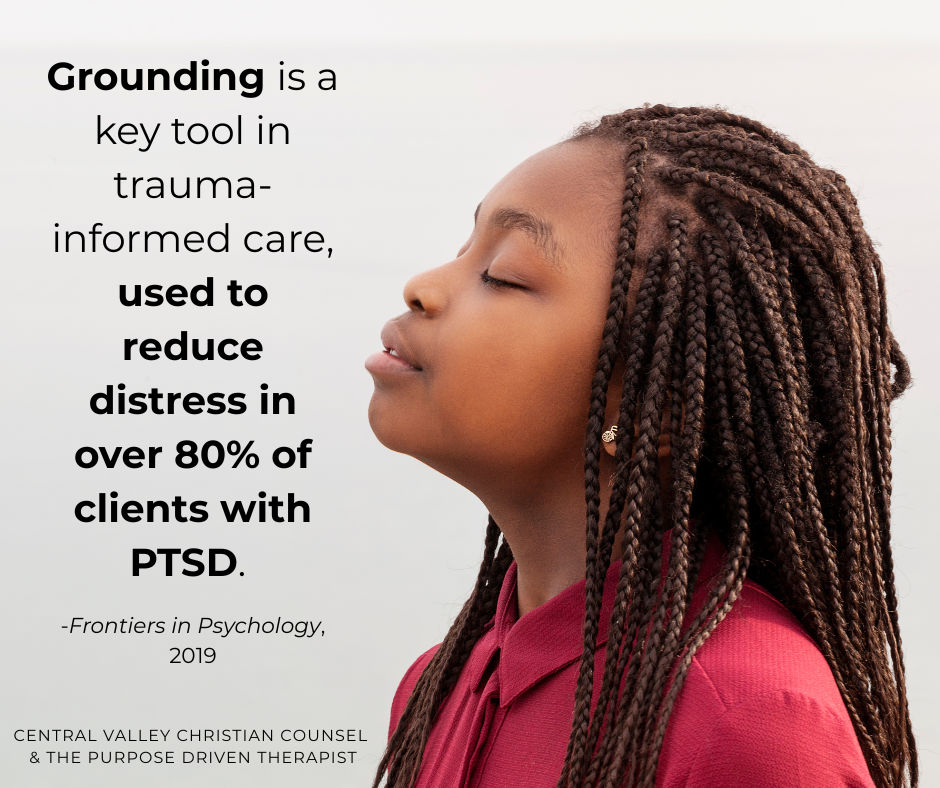
Grounding is a key tool in trauma-informed care, used to reduce distress in over 80% of clients with PTSD (Frontiers in Psychology, 2019).
Regular mindfulness practices also reduce cortisol levels (stress hormone), improving physical health outcomes over time.
Three Grounding Techniques You Can Try Today
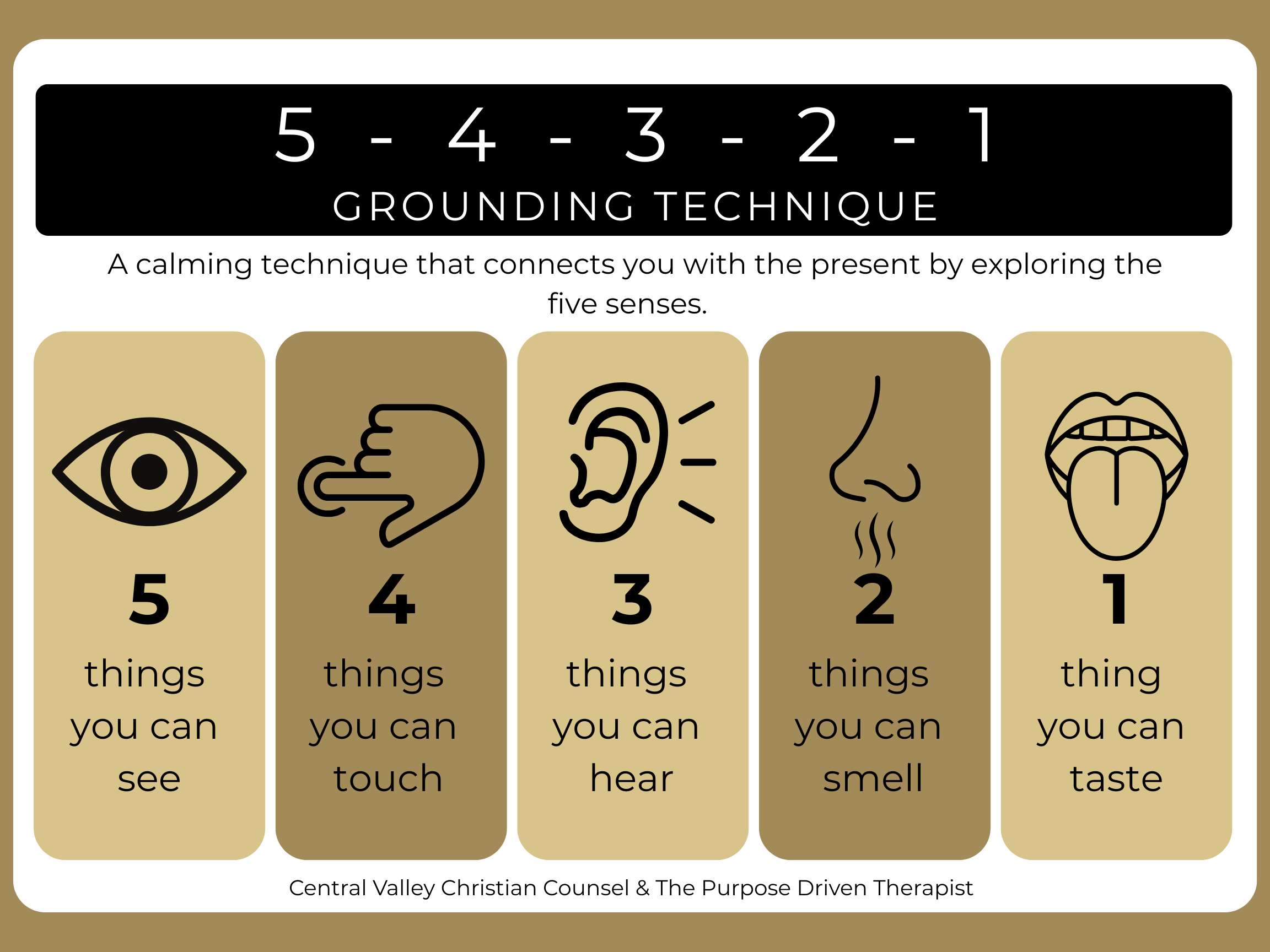
1. The 5-4-3-2-1 Sensory Technique
This classic method engages all five senses to bring you into the moment:
5 things you can see
4 things you can touch
3 things you can hear
2 things you can smell
1 thing you can taste
Try it: Look around your space and slowly name each item. Focus on each sense fully. Breathe deeply between steps.
2. Box Breathing
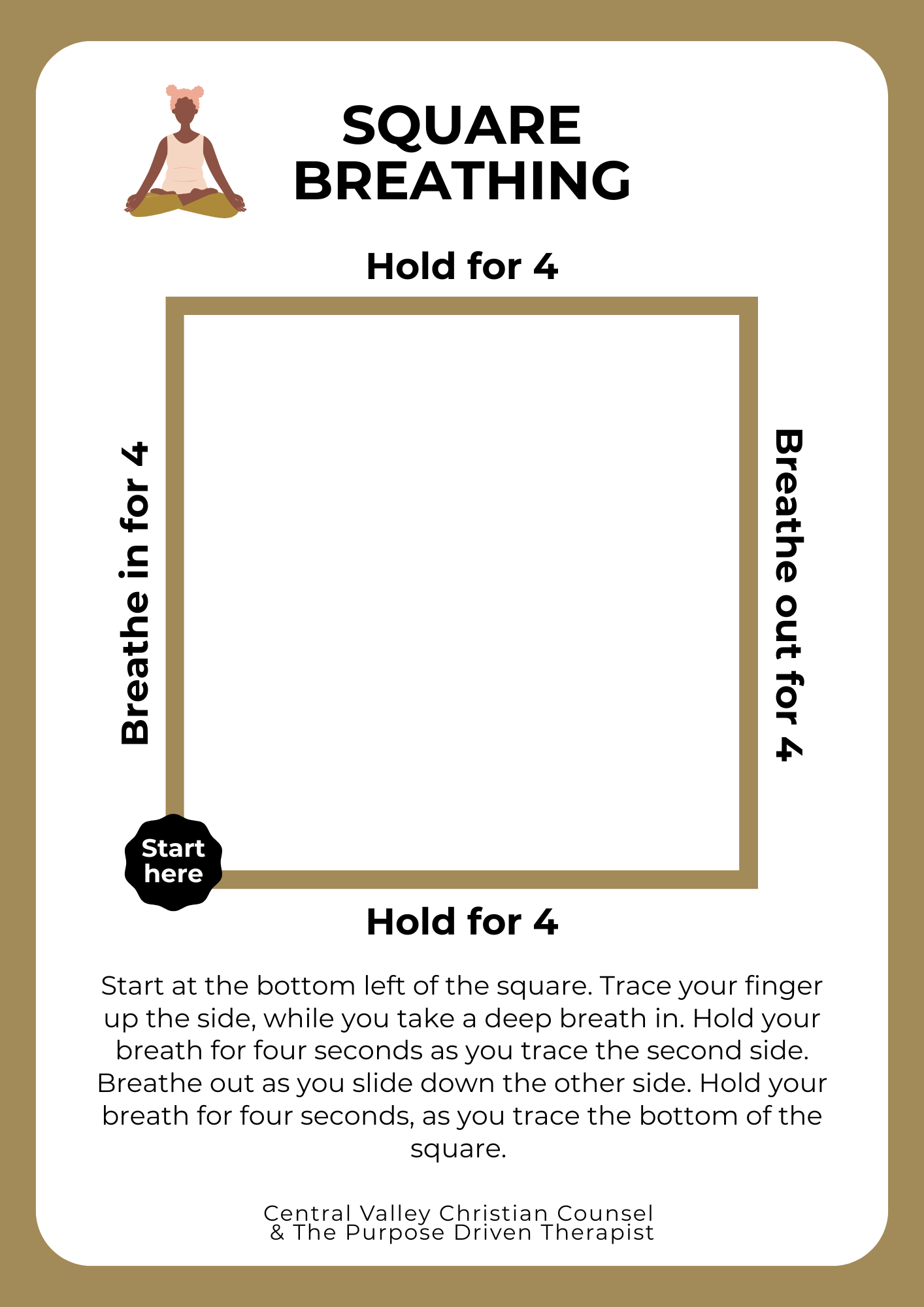
Also known as “square breathing,” this technique calms your body’s fight-or-flight response.
Inhale for 4 counts
Hold for 4
Exhale for 4
Hold for 4
Repeat for 4+ rounds
Try it: Trace a square with your finger as you breathe to stay focused. This is a favorite among athletes and Navy SEALs for staying calm under pressure.
3. Grounding Object
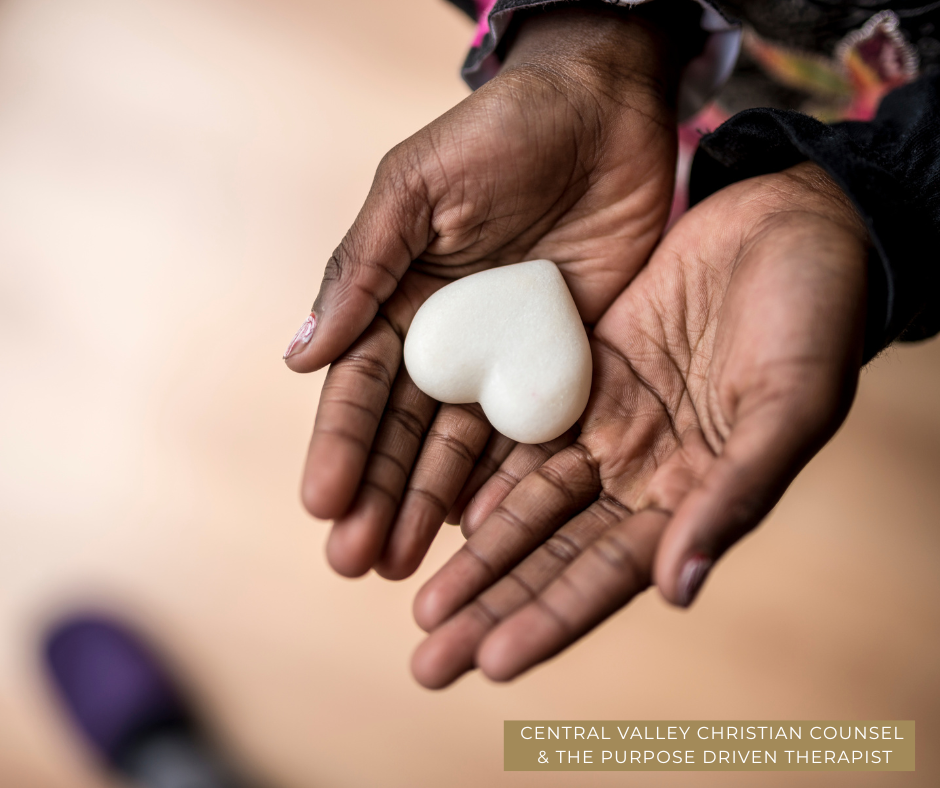
Keep a small item with you (a stone, fabric square, keychain) that has texture and weight. When anxious, hold the object and focus on its details.
Try it: Ask yourself: Is it smooth or rough? Warm or cool? What does it remind me of?
Our Favorite Grounding Techniques
At Central Valley Christian Counsel and The Purpose Driven Therapist, we believe grounding isn’t just something we teach—it’s something we practice. Here are some of our go-to techniques:
Jamal’s Favorites:
Controlled Breathing - helps me to destress, regulates my nervous system
Listening to music and motivational speakers while resting or exercising
Meditating on scriptures - Psalm 1 is a personal favorite
Prayer
Sit in quiet
Emily’s Favorites:
Body Scan - Bringing your attention to different parts of the body, noticing any sensations or feelings without judgment. This has been a helpful tool for both me and my kids at bedtime.
Meditation - Focusing on inspiring pictures and words.
Joyful Movement - Hot yoga, stretching, and going for walks.
Your Challenge: Ground Yourself This Week
We challenge you to pick one grounding technique from this blog and practice it at least once a day for the next 7 days.
Keep it simple. Choose something that fits into your routine—like breathing in your car before a meeting, or using the 5-4-3-2-1 method when you feel overwhelmed.
Pay attention to what shifts for you. Even a small change in how you breathe or feel can lead to deeper healing.
Want to Learn More? Start Here:

Books
All Along You Were Blooming – Morgan Harper Nichols
Anchored – Deb Dana
Black Liturgies - Cole Arthur Riley
Wherever You Go, There You Are – Jon Kabat-Zinn
Websites
Apps
Insight Timer – Guided meditations and breathwork (Free with optional premium)
Calm - Daily mindfulness practice (Free trial + subscription)
Headspace – Daily mindfulness practice (Subscription-based)
Therapeutic Support
Final Word
Grounding is not about escaping your life. It’s about returning to it—calm, clear, and connected.
If you’d like more help practicing grounding or are interested in therapy or coaching, reach out to us here. We’re available to help you stay anchored in purpose, presence, and healing.
